
Italian on Holiday: Understanding Language and Gestures
Understand Italian on holiday: Learn key expressions, gestures and dialects so you can experience Italy’s culture and people more authentically.
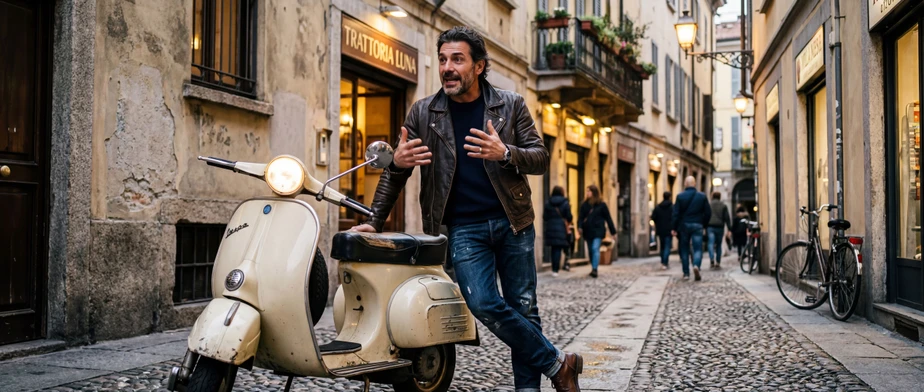
A holiday in Italy is something many people dream of. No surprise there. Italy offers a bit of everything: culture, sea, beaches, adventure and culinary delights.
It becomes especially interesting when you can talk to Italians in their own language. You get a very different connection to the people, the culture and the country as a whole.
The basic requirement is of course that you actually speak the language. It is a good idea to start speaking Italian at home in Germany so you can get familiar with it before your trip and learn the basics.
Once you arrive in Italy, especially in the south, you might feel as if you have never learned a word. That is because Italians use many different dialects in everyday life. On top of that, there is body language. If you know how to read it, you can have a whole conversation without saying a single word. As long as you understand what the individual gestures mean.
If you want to learn Italian, you should therefore not only focus on the spoken language, including words that never appear in a dictionary, but also keep an eye on gestures.
Words you will not find in a dictionary
When we think about words that do not appear in dictionaries, we usually imagine expressions that hardly ever come up in daily life. In reality, the opposite is true. Two very popular Italian expressions that many Italians use every day are missing from standard dictionaries, yet they are incredibly important in conversations.
Bho
“Bho” is the first one. It often goes together with an exaggerated shrug. It roughly means “No idea” or “I do not know”, but it appears in other situations too. Italians sometimes use it to express speechlessness or shock by simply saying “io bho…”, literally “I bho…”. The shrug makes the message even clearer.
In bocca al lupo
The second term is actually a full expression: “in bocca al lupo”. Literally, it means “In the wolf’s mouth”, but it is used to wish someone good luck and show you are rooting for them. The classic reply is “crepi”, meaning “may it die”. The “it” is the wolf. If the wolf dies, you can leave its mouth and you are safe. Italians never answer “Grazie” when someone says “In bocca al lupo”.
It can be challenging to hear these kinds of words and expressions and not know how to respond. It is therefore helpful to have a global eSIM with you. That way, you can quickly look up what a specific word or expression means, check how to interpret a gesture or simply find out how to get to the train station if all you get from a local is “bho”.
Gestures: a language of their own
It can be fascinating to watch Italians communicate through gestures. If you mute the loud talking, the TV and the background music, it can feel a bit like watching a silent movie in which whole conversations take place without a single word.
Gestures really are a language of their own. If you pay close attention during your stay in Italy, you will notice that most Italians:
- underline what they say with gestures
- can have a full conversation using gestures alone
In this context, it is only natural to wonder what the most common gestures actually mean. Here are some of the best known ones:
What do you want? What do you mean? (Ma che vuoi?)
This gesture is probably the most famous Italian gesture and even exists as an emoji. All fingertips are brought together so they touch, with the back of the hand turned towards the other person. The wrist then moves back and forth towards the conversation partner and back towards the speaker.
With this gesture, you show that you are confused or irritated. With older people, it is usually better not to use it at all.
I do not care (Non mi importa / non mi interessa)
To show that they could not care less about something, Italians place a hand with all fingertips together under the chin, palm up, and then flick it forward. At the same time, they pull the corners of the mouth down. This gesture expresses indifference. It is especially common in arguments when someone wants to stress that they are not interested in what the other person is saying.
I do not have it / It is not available (Non ce n’è)
You might think a simple shake of the head would be enough to show that the chocolate cornetti at the bar are sold out. Italians often add a hand gesture. They form a kind of pistol with thumb and index finger and move the wrist from left to right. This shows that something is not available or that they do not have it. The facial expression is usually apologetic.
Of course, there are many more gestures in Italian. It is worth learning them. According to educational studies, gestures can help you remember vocabulary more easily. The brain creates more connections and the word sticks better.
On top of that, hand movements and intonation are closely linked. Phonological studies have shown this connection between gesture and the melody of a language.
Italian dialects
There are estimated to be around 8,000 dialects in Italy. One reason is that pronunciation and emphasis can change from one village to the next. Some dialects even use completely different words so you cannot guess the meaning any more.
This is no reason to worry though. In everyday life, Italians usually speak standard Italian. You can often still hear where someone comes from by the way they stress certain words.
In general, dialects can be grouped into three main areas:
- Northern dialects
- Central Italian dialects
- Southern dialects
Each of these groups breaks down into many more local dialects. Interestingly, some varieties such as Neapolitan (napoletano) and Sardinian (sardo) are officially recognised as separate languages.
So Italians communicate not only through spoken words but also through gestures. In spoken language, you will often come across expressions that never appear in a dictionary and dialects that sound unusual at first. And Italian is not immune to Anglicisms either. If you hear young people say they want to “chillare” or “relaxare” in the afternoon, they simply mean they want to chill and relax. In the business world, there is even a draft law to protect the Italian language that aims to penalise the use of Anglicisms. It remains to be seen whether this proposal will ever become law.
More articles

Start your Italy holiday well prepared
Good planning makes your Italy holiday more relaxed. Discover tips on getting there, choosing accommodation and shaping a trip that balances culture, coast and culinary pleasures.
Budget Holidays in Italy: How to Travel on a Small Budget
Italy doesn’t have to be an expensive destination. With smart planning, the right accommodation and affordable activities, you can enjoy a great holiday even on a small budget.

Discover 8 Impressive Mountain Lakes in Italy
Discover 8 impressive mountain lakes in Italy and find out what makes these natural spots so special for hikers, peace seekers and pleasure lovers.
The Sassi of Matera: Discover the Cave Settlement
The Sassi of Matera are among the most impressive UNESCO sites in Italy. Discover what makes the cave settlement so unique and why a visit is well worth it.

Simple Trip Planning: Checklist for Your Holiday in Italy
Plan your holiday in Italy with ease: Essential tips on documents, climate, transport, arrival and food culture for a relaxed and memorable trip.
Family-friendly Excursions in Italy
Italy delights families with child-friendly excursions, theme parks and varied vacation days between lakes and coasts.
