
Ötzi: The Iceman from the Alps and His Story
Ötzi is one of Europe’s most important archaeological discoveries. Find out why the Iceman still fascinates today and what awaits visitors at the museum in Bolzano.
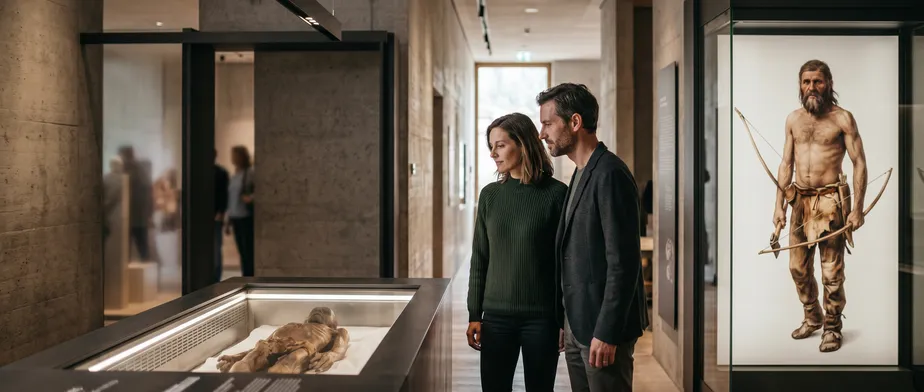
Some discoveries change how we see the past. Ötzi is one of them. The glacier mummy from the Alps is far more than a spectacular find. It is considered an exceptionally well preserved witness of its time and offers a rare direct view of life in the Stone Age.
Today, Ötzi can be seen at the archaeological museum in Bolzano in South Tyrol. The mummy has been stored and displayed there since 1998. For many visitors, it is the main reason to visit the museum. Hardly any other find makes history feel so immediate.
A discovery that drew worldwide attention
When Ötzi was discovered in 1991 on the Ötztal glacier, it quickly became clear how unusual this find was. The man from the Stone Age had lain in the ice for thousands of years and was preserved by it. This state of preservation made him especially valuable for research.
The age of the mummy is also remarkable. Ötzi lived and died long before the first bodies in ancient Egypt were embalmed. This is why he is considered the oldest mummy in the world. This fact alone helps explain the strong international interest in the discovery.
Why Ötzi remains so important today
Ötzi’s importance does not lie in his age alone. Above all, the find allows an unusually precise look at everyday life in the Stone Age. Researchers were able to identify traces of a life that is otherwise mostly passed down in fragments. Instead of individual tools or isolated bones, a person from prehistory suddenly moved into the center of attention.
This is exactly what makes Ötzi so fascinating. He does not just stand for an era, he makes it tangible. History here is not abstract. It has a face and a story that still resonates today.
The museum in Bolzano as a window into the Stone Age
The archaeological museum in Bolzano preserves this special find under controlled conditions. Anyone interested in archaeology, human history or South Tyrol will find one of the most compelling places in the region here. The exhibition around Ötzi helps visitors place the discovery in its historical context.
This is what makes a visit so appealing. It is not only about seeing a famous mummy. It is also about understanding why this man from the ice continues to move researchers and visitors alike.
A piece of human history from the ice
Ötzi links nature, history and science in a unique way. The man who once died on the Ötztal glacier was preserved by the ice and rediscovered thousands of years later. Today he tells of a world long gone that still feels surprisingly close.
Standing in front of this find in Bolzano, you see more than a mummy. You encounter a rare and powerful piece of human history. This is what makes Ötzi one of the most fascinating discoveries in Europe.
More articles
Family-friendly Excursions in Italy
Italy delights families with child-friendly excursions, theme parks and varied vacation days between lakes and coasts.

Adventure Holidays in Italy Between Mountains and Sea
Italy inspires active travelers with hiking, surfing, kayaking and varied outdoor experiences between the Alps and the coast.

Enjoy wellness and thermal spas in Italy with style
From thermal springs to spa retreats in special locations: Italy brings together wellness, nature and stylish relaxation in a gentle and effortless way.
Italy’s lettering culture: from antiquity to espresso
Italy’s lettering culture shapes streets, facades and cafés. Discover Roman inscriptions, everyday typography and a very distinctive aesthetic.

Successfully Market Your Holiday Rental in Italy
How to market your holiday rental in Italy more effectively: five proven approaches for more visibility, more enquiries and better booking opportunities.

Start your Italy holiday well prepared
Good planning makes your Italy holiday more relaxed. Discover tips on getting there, choosing accommodation and shaping a trip that balances culture, coast and culinary pleasures.
